
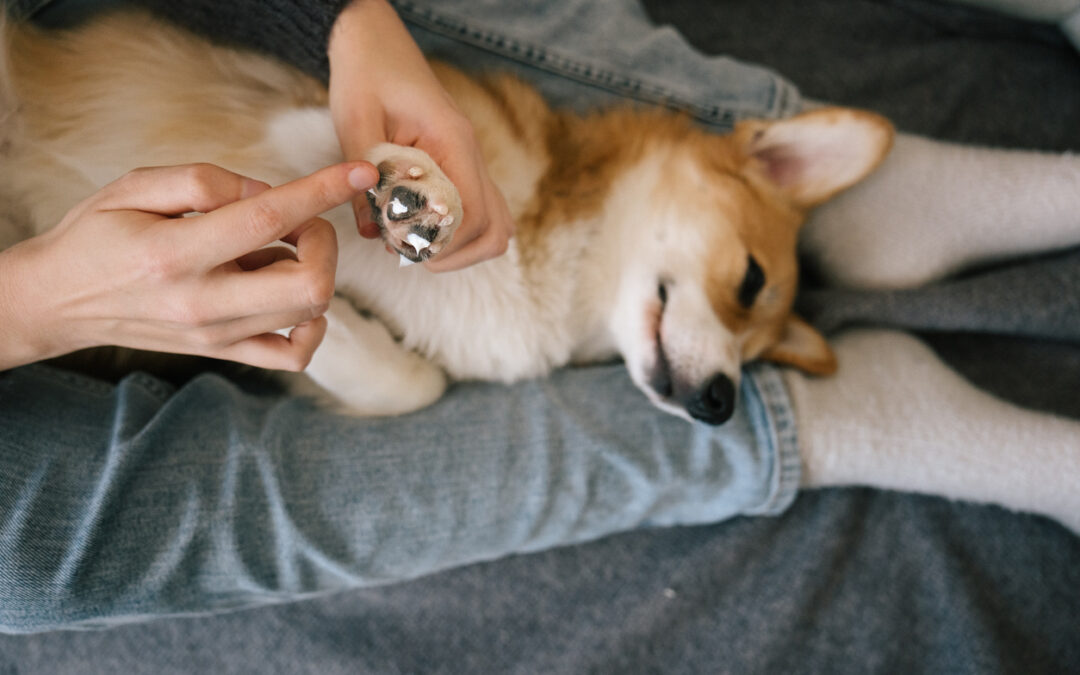
What is the best winter paw care for dogs and cats? Wipe paws after every outing, inspect the pads for ice, salt, or cracks, and keep coats brushed and dry. Castle Pines Veterinary Hospital walks through each step below.
Winter in Castle Pines is hard on more than ears and noses. Snow, ice melt, dry indoor heat, and long stretches in damp fur all take a toll on paws, skin, and coat.
The good news is that most of it can be handled with a short routine. Here is a five-minute winter care routine for dogs and cats, one minute at a time, starting with the paws.
Minute One: How Do You Protect Paws From Snow and Ice Melt?
Wipe your pet’s paws with a warm, damp cloth after every outing to remove snow, salt, and de-icing chemicals before they can be licked off. Ice melt can irritate skin and cause mouth or stomach upset when pets groom it from their paws, and packed snow can ball up between the toes.
A pet-safe paw balm applied before a walk adds a protective layer. Dog paw care in winter often includes well-fitted boots for long stretches on snowy sidewalks and trails, and most dogs need a few short practice sessions indoors to accept them.
Outdoor and indoor-outdoor cats pick up the same residue on their paws and groom it off later, so wipe their paws as well.
Minute Two: What Should You Check on Dog and Cat Paw Pads?
Check between the toes and across each pad for ice balls, salt crystals, cracks, redness, or cuts.
A few simple habits keep paws in good shape:
- Trim the hair between the toe pads so snow cannot pack in, but leave the pads themselves alone.
- Dry thoroughly between the toes after rinsing or wiping.
- Keep nails trimmed, since long nails change how a pet grips icy ground.
- Call our Castle Pines vet services team if a pad is cracked deeply or bleeding, or if your pet limps or keeps licking one paw.
Minute Three: Why Does My Pet Have Dry, Flaky Skin in Winter?
Dry indoor heat and low humidity are a common reason for dry skin in dogs and cats in winter. Along the Front Range, the air is dry to begin with, and running the furnace pulls even more moisture from skin and coat. You may notice dandruff, itching, a dull coat, or extra static when you pet them.
A humidifier in the room where your pet sleeps, plenty of fresh water, and regular brushing to spread natural skin oils all help. Bathe only when needed, use a shampoo made for pets, and never use human shampoo, because frequent or harsh bathing strips the oils that protect skin.
Dryness is not always the cause. Constant scratching, red or irritated skin, hair loss, a strong odor, or scabs can point to allergies, fleas, or infection, so mention them to your vets in Castle Pines, CO at your pet’s next visit. Flea prevention matters in winter too, since fleas can live indoors all year.
Minute Four: How Do You Care for Your Pet’s Coat in Winter?
Winter coat care means keeping your pet’s coat brushed, dry, and free of mats so it can insulate properly. Mats trap moisture against the skin, collect ice and snow, and reduce the coat’s ability to hold warmth. Long-haired dogs and cats benefit most from frequent brushing, especially around the legs, belly, and behind the ears.
Avoid shaving double-coated dogs for winter, since the undercoat provides insulation. Small, thin-coated, senior, or very young dogs may need a well-fitted coat or sweater on cold days, and any wet pet should be towel-dried well before going back outside.
Minute Five: Do Cats Need Help With Winter Grooming?
Yes, many cats do, especially seniors, long-haired breeds, and cats with arthritis who cannot reach every spot. Cats groom themselves, but a few minutes of gentle brushing several times a week removes loose hair, prevents mats, and lets you feel for lumps or sore spots.
Dry winter air can also make a cat’s coat look dull or flaky. Watch for greasy or matted fur along the back and hips, which can mean a cat is struggling to groom.
Dogs need the same attention: run your hands over your dog’s body weekly, feeling for mats, bumps, or flaky patches.
Senior pets may need extra help with grooming and icy walks, so mention any stiffness at visits.
When Should You Schedule Winter Pet Wellness Exams?
Schedule winter pet wellness exams if your pet has dry or flaky skin, cracked paw pads, a matted or dull coat, or has not been seen in the past year. Cold weather and dry indoor heat can expose problems that are easy to miss in warmer months. A pet wellness exam gives your veterinarian a chance to check skin, coat, paws, joints, and weight. Our pet preventive care covers vaccinations, flea and tick prevention, heartworm protection, and parasite screening.
Keep Paws, Skin, and Coats Winter-Strong at Castle Pines Veterinary Hospital
Dry skin, cracked paws, and a dull coat are easy to fix when you catch them early. Castle Pines Veterinary Hospital is AAHA accredited and offers trusted veterinary services in Castle Pines, CO and has also helped pets from Castle Rock, Parker, and Highlands Ranch since 2003, so we are ready to help yours feel comfortable all winter. Call 303-688-8665 or request your pet’s winter skin and paw check at Castle Pines Veterinary Hospital.
Source: AVMA cold weather safety guidance.